
May 2026
PA Turnpike Commissioners Approve Budget
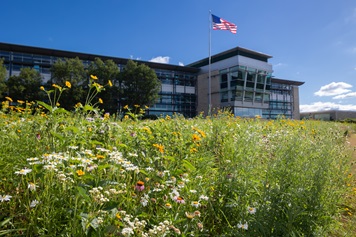
PA Turnpike Commissioners last week approved the 2027 annual budget along with the 10-year capital plan. The budget represents 4% growth over the previous year, and the Capital Plan invests $8.29 billion in infrastructure over the next decade.
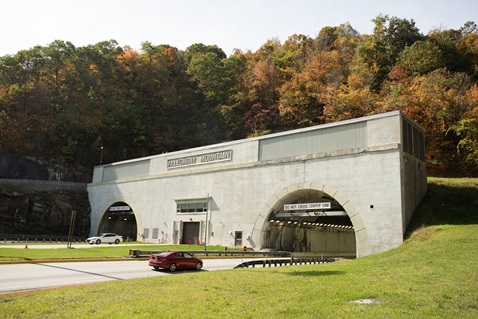
Allegheny Mountain Realignment Project: PA Turnpike Addresses Why It’s Needed, Benefits
The Allegheny Tunnel has been a part of the PA Turnpike since the first Studebakers rolled across the highway in 1940, but the way through the mountain in Somerset County is aging. The most affordable and sustainable way for the future isn’t through but around.
PA Turnpike Begins New Breezewood Interchange Project
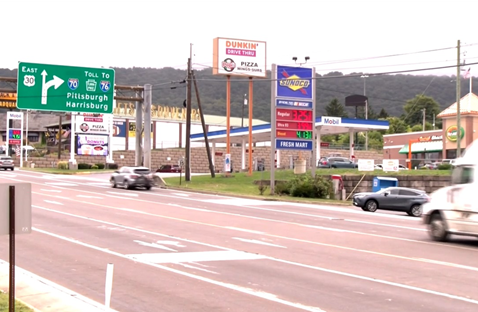
The Pennsylvania Turnpike has officially started the preliminary engineering design phase of a direct connection to Interstate 70. It will create a smoother commute for travelers who want to stay on the highway while offering Breezewood visitors a safer, less congested entry into the community.
Pennsylvania Turnpike Commission Approves 2027 Annual Budget and 10-Year Capital Plan
The Pennsylvania Turnpike Commissioners last week unanimously approved the 2027 Annual Budget and the 2027-2036 Capital Plan.
The $478 million operating budget represents 4% growth from the current year, and the 10-year Capital Plan invests $8.29 billion in infrastructure, supporting total reconstruction, interchanges, highway maintenance, facilities, structures, fleet and IT.
As an independently operated toll road, the PA Turnpike receives no tax dollars for its operations. Toll revenue provides reliable system funding that covers maintenance, repairs or infrastructure improvements.
The PA Turnpike projects almost $2 billion of revenue in the new fiscal year, with half directed to debt service. The burden of $8.1 billion in debt accrued through Act 44 of 2007, which mandated the PA Turnpike to fund statewide transportation projects beyond the toll system, makes a conservative budgeting strategy critical.
Traffic volumes increased 1.4% compared to the same period in fiscal year 2025. Passenger vehicle traffic held steady at 95% of peak 2019 levels while commercial vehicle traffic remained 12.3% above 2019 levels through the most recently completed fiscal year.
Due to Act 44-related toll increases and traffic volume growth, toll revenues remain healthy and exceed 2026 estimates.
Advancing safety
In 2027, $545.8 million of the $873.9 million Capital Plan budget will enhance the system’s infrastructure – improving safety, reducing congestion, and providing a more efficient travel experience for PA Turnpike customers. It also allocates funds for 20 projects under the Total Reconstruction program – a system-wide initiative that increases capacity while making corridors safer, smoother and more efficient – and continues major bridge replacement projects at Hawk Falls and I-95.
Another key component of the I-95 Interchange Project is the replacement of the Delaware River Bridge, which will improve the 70-year-old bridge to increase capacity, enhance safe travel and ease congestion.
Recently, the PA Turnpike began one of its most complex projects to date with the total reconstruction and widening at Milepost 320-324, a four-mile stretch in Tredyffrin Township, Chester County.
Enhancing customer service
The approved 2027 budget invests $38 million to complete and roll out the PA Turnpike’s new back-office system, Journi. Designed to meet ever-changing consumer needs and provide a more streamlined and seamless experience, customers can expect “one-stop-shop” enhancements such as:
Enhanced self-service capabilities
Increased payment options
More convenient and accessible communication channels
More personalized interactions
More efficient problem-solving
Embracing growth
To prepare for 2027’s Open Road Tolling (ORT) expansion west of Reading, this year’s budget provides supports interchange conversion and reconfiguration, as well as implementing tolling technology.
Interchange reconstruction east of Reading and on the Northeast Extension is entering the home stretch. By the end of 2026, toll booth removal on this section of the PA Turnpike – the first to convert to ORT – will be completed. Customers should soon begin to see its safety benefits, including a more natural, free traffic flow.
The 2027 annual budget also provides $79.5 million for the PA Turnpike’s dedicated, 24/7 coverage by Pennsylvania State Police Troop T.
PA Turnpike Begins New Breezewood Interchange Project
The Pennsylvania Turnpike has officially started the preliminary engineering design phase on a long-awaited project to bypass one of its most congested interchanges.
The redesigned Breezewood Interchange will maintain local access to State Route 30 in Breezewood, while also providing a direct connection to Interstate 79, accommodating travelers who want to remain on the PA Turnpike while offering those visiting Breezewood a safer, less congested entry to the community.
“It is not only a transportation project, but it also touches the quality of life of many people who call Breezewood home in a positive way,” said Breezewood Project Manager Mohammad Mohammad.
PA Turnpike officials will continually connect with the community throughout the process, as they did with a stakeholders meeting last month. About 32 people attended the meeting and, overall, it was a positive experience, said Mohammad. While some expressed concerns that redirecting traffic between the PA Turnpike and I-70 could harm local businesses, others said businesses were already on the decline and this project would address their concerns about safety for both the community and commuters.
“Simply pulling the truck traffic and making the high-speed connection would save travelers so much time and reduce congestion on State Route 30,” Mohammad said.
Breezewood Interchange Project:
- As a result of the aging infrastructure and the implementation of Open Road Tolling (ORT), the PA Turnpike has an opportunity to redesign the Breezewood Interchange (Exit 161) with a connection to I-70.
- The Commission just kicked off preliminary engineering phase and will be actively performing field work as we study approximately 10 different alternatives.
- This new reconfiguration will significantly improve safety, mobility and travel reliability throughout this corridor.
- It will enhance transportation infrastructure, connectivity and potential economic development in the Breezewood area.
The project also gives the community a chance to reimagine itself and what it can be without the stand-still traffic, he added.
Breezewood is among the first communities that will benefit from the flexible interchange design now possible thanks to Open Road Tolling, which goes live across the entire system in January 2027. Since toll plazas are no longer needed at interchanges with the cashless, free-flowing tolling system, access points like the Breezewood project or new interchanges to new communities require a significantly smaller footprint at a lower cost and potentially inspire economic development.
Construction is still about a decade away with preliminary engineering continuing through 2029.
Pennsylvania Turnpike Commission Shares Plan to Improve Travel Through Allegheny Mountain
The Pennsylvania Turnpike Commission is advancing plans for the Allegheny Mountain Realignment Project, a long-term effort to make travel safer, smoother, and more reliable along a key stretch of roadway in Somerset County.
For many drivers, the Allegheny Tunnel is a familiar part of America’s First Superhighway, but after 85 years, it is aging and becoming more difficult and expensive to maintain. After nearly 30 years of study and community input, the PA Turnpike has identified a new roadway alignment around the tunnel rather than tunnel rehabilitation as the best path forward.
At the heart of this project is safety. The current tunnel area has a crash rate about three times higher than similar roadways across the state, due in part to narrow shoulders and limited space for drivers to react. The proposed realignment would introduce a modern, seven-lane roadway designed to give drivers more room and better visibility with the goal of reducing crashes and improving response times when incidents do occur.
Allegheny Mountain Realignment Project:
- Bypasses the current tunnels, adding a new stretch of mainline roadway to increase safety, access, and mobility, while reducing congestion.
- Places a top priority on the safety of highway workers, first responders, and the half a million drivers who travel our roadway every day.
- During preliminary design, the project team begins field work and performs various environmental and engineering studies to understand the project impacts to the local community and environment. As we work through preliminary engineering and final design, every effort will be made to minimize environmental impacts in coordination with state and federal environmental agencies.
The project is also about improving the day-to-day travel experience. Right now, the tunnels can create a bottleneck, especially during busy travel times. The new alignment would add capacity and include a dedicated truck climbing lane, helping traffic move more steadily and reducing delays for everyone on the road.
There are benefits beyond the PA Turnpike as well. Because hazardous materials are not permitted in the tunnels today, those trucks must use local roads. By removing that restriction, the realignment would keep more traffic on the PA Turnpike, improving safety for nearby communities and making freight movement more efficient.
Some have asked why not simply repair or expand the existing tunnels. Those options were carefully studied, but they would not fully solve the safety and congestion challenges. They would also take longer to build, cost significantly more, and require major lane closures that could lead to miles of traffic backups during construction.
The realignment project is designed as a long-term solution that replaces aging infrastructure with a modern roadway built to meet today’s needs and tomorrow’s demands.
As planning and design continue, the PA Turnpike is committed to working closely with the public and environmental agencies. Efforts are underway to minimize impacts to streams, wildlife, and surrounding communities while delivering a project that meets all regulatory requirements.
In the end, this project is about more than replacing a tunnel -- it’s about creating a safer, more efficient corridor that better serves travelers and the community for years to come.
Go Orange Returns With Start of New Construction Season
Memorial Day weekend is approaching fast, and that means road crews will be out in full force once again.
It also means the return of the PA Turnpike’s Go Orange program, which is back for its 11th season.
It’s a program that uses bold colors and messages, all for one important purpose.
“We felt the color orange should be a clear message,” said Strategy and Communications Officer Kelli Roberts, who was part of the team that created Go Orange. “When you see orange on the highway, do what you’re supposed to do.”
And that is to slow down and pay attention.
Here’s a look at some of the Go Orange images you’ll see on billboards, social media and other places this summer.

Go Orange is about protecting our highway crews, and the most solemn reminder of that duty we all have is The PA Turnpike Lost Worker Memorial (pictured) – consisting of highway cones topped with a PA Turnpike hardhat, each bearing the name of one of the 45 workers who did not make it home to their family.
And the program is working. More than a decade after its launch, Go Orange, in conjunction with other programs, helped reduce the PA Turnpike’s work zone crash rate by 20%. Check out last month’s The Road Ahead for more details.
But most impressive to Roberts is how the program caught on with PA Turnpike employees who, all summer long for the last 11 years, have celebrated Go Orange Wednesdays. If you walk into any office or Maintenance facility – or even have a virtual meeting with an employee working remotely -- you’ll find most employees decked out in the orange, showing their support for highway crews and spreading the message of safety. And the fact that they’re still doing it today show’s Go Orange is more than a marketing campaign.
It’s a flashing, orange reminder that we cannot ignore.
“We all play a role in promoting safety,” Roberts said.
You can do your part, too, by slowing down, driving safely, and signing the Go Orange pledge.
Restoring Small Streams Has Big Impact: Before-and-After Video
Stony Run may be small, but it flows into much larger waterways.
It’s National Storm Water Stewardship Month, and as part of the PA Turnpike’s efforts to reduce pollutants flowing downstream, contracted crews recently restored a section of rural Lancaster County stream. Check out this before and after video to see the dramatic difference:
Stony Run Before-and-After Video
The “before” photos show exposed soil along the stream bank. That’s a problem because when water rushes through during a storm, it scours those banks, sending sediment downstream, Engineer Project Manager Raelene Gabriel explained.
“By stabilizing the stream and restoring the floodplain, it slows things down,” she said. “The restored stream and floodplain stop pollutant transportation downstream, reducing the amount of pollution sent to the Chesapeake Bay.”
Projects like this fall under the PA Turnpike’s Municipal Separate Storm Sewer Systems, or MS4, program. Though MS4 is a federal regulation, Gabriel and her team take restorations like this to heart because it’s also about being good stewards of the environment.
And when it comes to pollutant reductions, Stony Run is far from a drop in the bucket. The PA Turnpike completed two other similar projects around the system to restore stream segments and floodplains. One is along unnamed tributary to Pierson’s Run in Plum, Allegheny County, that flows to the Ohio River, and the other is along Marsh Creek in Upper Uwchlan Township, Chester County, which flows to the Delaware River.
To find out more, visit the PA Turnpike’s Clean Water website.