
The Allegheny Mountain Realignment Project: Enhancing Safety, Access and Mobility
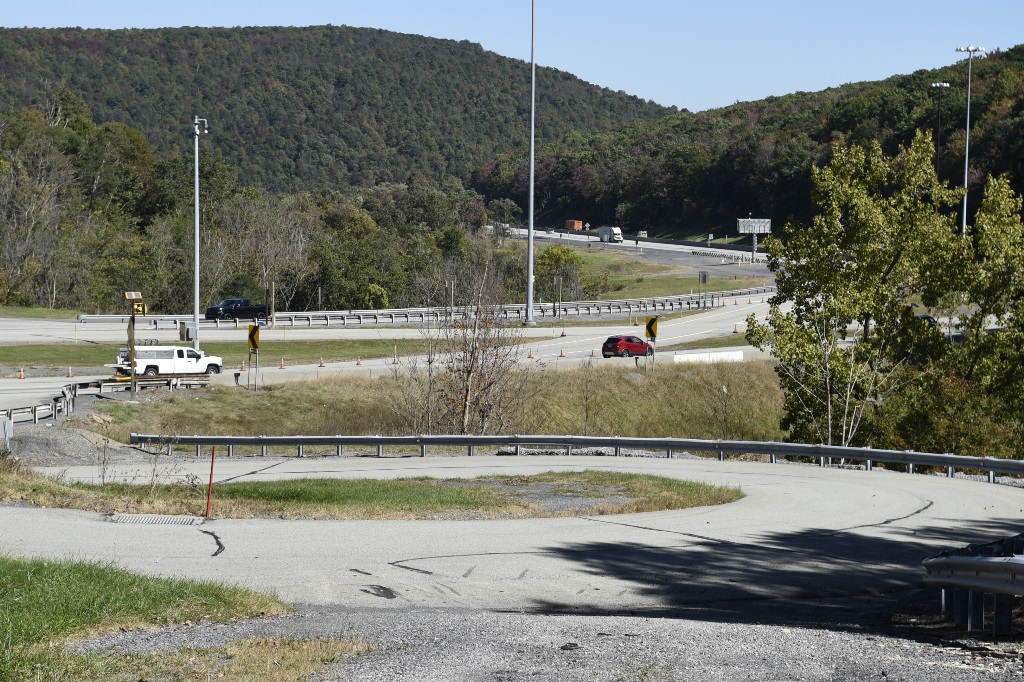
The Allegheny Mountain Realignment Project is a major initiative that addresses aging infrastructure and improves safety, access, and mobility in the region, reflecting the foundational principles that led to the establishment of the Pennsylvania Turnpike.
When the Pennsylvania Turnpike welcomed its first customers in October 1940, the 160-mile stretch between Carlisle and Irwin made history as “America’s First Superhighway.”
Within twenty years, the roadway had expanded significantly, growing to 360 miles and supporting roughly 57 million customers total systemwide. Now in its 85th year, the Pennsylvania Turnpike’s network stretches more than 550 miles and supports roughly 193 million customers across the Commonwealth.
In those intervening decades that revolutionized travel, thousands of transportation industry changes enhanced the way we built, drove and used highways.
But the Pennsylvania Turnpike’s mission – operating a safe, reliable and customer-valued toll road system that supports national mobility and commerce – remained the same.
The Allegheny Mountain Realignment project reinforces this commitment.
Safety Drives the Allegheny Mountain Realignment
The Allegheny Mountain region has some of the Commonwealth’s most dramatic and rugged landscapes.
The nearly 100-year-old tunnel is near the system's highest elevation point and its longest interchange-to-interchange distance—36 miles from Bedford (Exit 146) to Somerset (Exit 110).
Challenging terrain, coupled with 1940s-era highway design – including narrow medians and limited shoulder widths – can delay first responders. Given that the crash rate at this location is three times higher than the PA Turnpike’s statewide average, addressing those needs becomes even more critical.
The proposed stretch of new, mainline roadway improves alignment, which plays a critical role in roadway safety and can lead to reduced crashes. This, in turn, improves overall safety for highway workers, first responders and the half a million drivers who use this roadway daily.
The Allegheny Mountain Realignment Improves Access and Mobility
The Pennsylvania Turnpike is a vital Mid-Atlantic transportation corridor, and, after more than 85 years, the Allegheny Tunnel’s current configuration no longer meets transportation industry standards.
Commercial traffic is growing on the Pennsylvania Turnpike – unlike most toll roads – due to its ability to provide direct routes from the Midwest to the East Coast and connect major interstate highways. Since federal guidelines restrict vehicles shipping certain hazardous materials from traveling through the Allegheny Tunnel, trucks are rerouted from our roadway and onto local roads, which aren’t built to accommodate the volume. The proposed realignment eliminates these restrictions and reduces traffic in nearby communities.
The Allegheny Mountain Relieves Congestion
The Allegheny Mountain Realignment project adds new travel lanes and a dedicated truck climbing lane, reducing congestion and enhancing the Pennsylvania Turnpike’s efficiency and reliability for all customers.
Built in the 1940s, the Allegheny Tunnel now handles double the intended volume, causing delays, slowdowns at tunnel and increased crash rates. With no shoulders inside the structures, disabled vehicles or crashes leads to standstill or slow-moving traffic – which is only exacerbated during major travel periods where the Pennsylvania Turnpike can see millions of customers over a short window.
During routine maintenance or inspection, the PA Turnpike works in one tunnel tube at a time, often at night to minimize customer and community impact. These short-term disruptions require careful planning, coordination and staffing to prioritize safety, maximize productivity and prevent extensive renovations, which would be a major disruption for the area.
Progressing and Refining the Project
Initiated in 1996, the Allegheny Mountain Realignment Project has undergone decades’ worth of transportation, environmental, geologic and engineering study and planning. Following a series of funding delays that paused the project from 2001 to 2010, the project restarted and continues to engage the community, first through an open-house public plans display in 2020 and then again in 2024 with its fourth public hearing.
The public feedback is being incorporated, where feasible, as the project now progresses with preliminary engineering underway. During preliminary engineering, the project team continues to collect data and refine the alignment through 2028. Construction is anticipated to begin in 2032. Track project progress, learn about key milestones and connect with resources here.
Frequently Asked Questions About the Allegheny Mountain Realignment Project
What is the Allegheny Mountain Realignment Project?
The Allegheny Mountain Realignment Project is a long-term PA Turnpike initiative designed to improve roadway safety, traffic flow and mobility by modernizing aging infrastructure and updating mid-20th-century highway design standards.
Why is the Allegheny Mountain Realignment needed?
The current roadway includes narrow shoulders, limited medians and a nearly 100-year-old tunnel that no longer meets modern transportation standards. Crash rates in this section are significantly higher than the Turnpike’s statewide average, making safety improvements a priority.
How will the project improve safety on the PA Turnpike?
The proposed project improves roadway alignment, adds travel lanes and enhances access for first responders. These upgrades are expected to reduce crashes, improve incident response times and create safer conditions for drivers, workers and emergency personnel.
What traffic improvements will drivers see from the project?
Drivers can expect reduced congestion, smoother traffic flow and a dedicated truck climbing lane designed to improve efficiency on one of the PA Turnpike’s most challenging mountain sections.
Will the realignment impact commercial truck traffic?
Yes. The new roadway design aims to eliminate restrictions that currently prevent certain hazardous-material shipments from using the Allegheny Tunnel, helping reduce truck rerouting onto local community roads.
How does the project improve mobility and regional access?
The PA Turnpike serves as a major Mid-Atlantic transportation corridor connecting the Midwest and East Coast. By modernizing infrastructure and reducing bottlenecks, the project supports commerce, regional travel and long-distance freight movement.
Preliminary engineering is underway, with data collection and alignment refinement expected through 2028. Construction is currently anticipated to begin around 2032.