
PA Turnpike Invests in Total Reconstruction to Improve Safety and Traffic
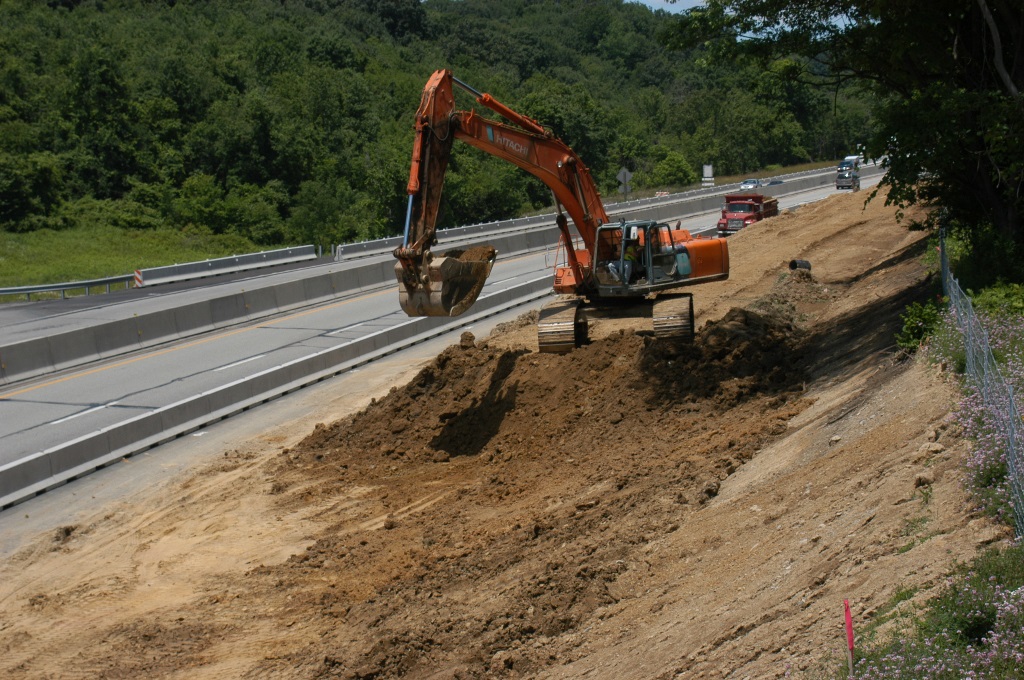
In its first operating year, the PA Turnpike welcomed 2.4 million vehicles onto its 160-mile, four-lane concrete road. Fast-forward from 1940 to now and America’s First Superhighway welcomes more than 193 million annual customers systemwide. Though the original paving work remains, 85 years of Pennsylvania’s freeze-thaw cycles and increased traffic significantly impacted the roadway. Additionally, advanced design and safety standards mean many of those original sections are at the end of their useful lifecycles.
For that reason, the Pennsylvania Turnpike Commission prioritizes, and directs the majority of its budget, to the Total Reconstruction Initiative. This effort not only rebuilds the existing roadway from the ground up, but it also smooths curves and grades, enhances safety and adds capacity for the traveling public.
The PA Turnpike is Widening the Roadway, Starting with the Outside
The PA Turnpike’s Total Reconstruction Initiative began in 1999. In addition to rebuilding and smoothing travel, the system-wide initiative widens the roadway from two to three lanes in each direction, increases shoulder and median width to support safety, minimizes traffic queuing and provides more efficient emergency responder access.
How does the PA Turnpike rebuild from the ground up without closing or stopping traffic flow? Here’s how it works: Crews expand outward first, building a new lane on either side of the roadway while traffic moves on existing lanes. Once two new lanes are built, traffic is routed there and construction begins between them. Throughout the process, the Turnpike maintains two lanes of traffic in each direction.
PA Turnpike Total Reconstruction: By the Numbers
- To date, 174 miles of PA Turnpike mainline (the portion stretching from Ohio to New Jersey) have been widened to six lanes. This improves capacity, enhances major transportation corridor access and accommodates current incident management methods to offer safer, more reliable travel.
- Reconstructing an 85-year-old roadway requires removal of existing roadway materials. Beyond the traditional cement and dirt, which can also include steel rebar, trees and topsoil that had been bulldozed underneath decades ago.
- The Milepost 102-109 Total Reconstruction Project in Somerset County was recently recognized by the American Society of Highway Engineers (ASHE) with a 2025 Outstanding Highway Engineering Award. The 7-mile project excavated 2 million cubic yards of dirt.
- Piles of old cement can reach 30 feet high, twice the height of two tractor-trailers stacked on top of one another.
- Crews typically work deep beneath the existing pavement, often excavating several feet below before constructing the new pavement, which typically is 26-27 inches deep. All of this while protecting drainage, utilities and anything else underground.
- During the process, contractors may recycle older cement into subbase through specialized machinery. For example, crews for the Milepost 312-316 Total Reconstruction Project in Chester County recycled approximately 37,000 cubic yards of existing concrete pavement into the subbase. This is average for a job that is about 4.5 miles.
- Each Total Reconstruction Projects creates a brand-new drainage system to support better drainage. Carefully assessing the area’s water flow and drainage patterns prevents roadway flooding and maintains the integrity of the roadway.
Learn more about our Total Reconstruction Initiative through Episode #5 of Turnpike TV.
Turnpike TV - Total Reconstruction
Frequently Asked Questions about the PA Turnpike’s Total Reconstruction Initiative
What is the PA Turnpike’s Total Reconstruction Initiative?
The PA Turnpike’s Total Reconstruction Initiative is a long-term, system-wide program to rebuild aging sections of the roadway from the ground up. The initiative replaces pavement that dates back to the 1940s, modernizes curves and grades, widens lanes and improves safety features to meet today’s design standards.
Why is the PA Turnpike being rebuilt?
Much of the PA Turnpike was originally built more than 85 years ago and has been significantly impacted by heavy traffic, weather, and freeze-thaw cycles. Total Reconstruction ensures the roadway remains safe, reliable, and capable of handling modern traffic volumes for decades to come.
How long has the Total Reconstruction Initiative been underway?
The PA Turnpike’s Total Reconstruction Initiative began in 1999 and continues today. It is one of the largest infrastructure modernization programs in the region.
How does the PA Turnpike rebuild the road without shutting down traffic?
Construction crews widen the roadway outward first, building new lanes on the outside while traffic continues to flow on existing lanes. Once the new lanes are complete, traffic is shifted and work begins in the center. Throughout the process, at least two lanes of traffic are maintained in each direction whenever possible.
How many miles of the PA Turnpike have been reconstructed?
To date, approximately 174 miles of the PA Turnpike’s mainline have been widened to six lanes, significantly improving traffic flow and corridor capacity.
What improvements come with Total Reconstruction?
Total Reconstruction projects typically include:
- Widening from two to three lanes in each direction
- Wider shoulders and medians
- Improved curves and grades
- New drainage systems
- Stronger, deeper pavement structure
These upgrades enhance safety, reduce congestion and support emergency response.
Why does reconstruction take so long?
Rebuilding an 85-year-old highway is complex. Crews must remove old pavement, steel, soil, and even buried debris while protecting underground utilities, managing water drainage, and maintaining traffic. Each project essentially builds a brand-new roadway from scratch.
How does Total Reconstruction improve safety?
Total Reconstruction helps to significantly lower crash risk and improve reliability for travelers by:
- Reducing sharp curves and steep grades
- Increasing shoulder space for breakdowns
- Improving drainage to prevent flooding
- Supporting modern incident management and emergency access