Pennsylvania Turnpike Commission Releases After-Action Review for Allegheny Tunnel Vehicle Fire
The Pennsylvania Turnpike Commission has released its findings, response, lessons learned and immediate actions for the Allegheny Tunnel vehicle fire that occurred on June 4, 2026.
Pennsylvania Turnpike Commission Releases After-Action Review for Allegheny Tunnel Vehicle Fire
Quick Summary:
- The Pennsylvania Turnpike Commission completed a review of the June 4, 2026 fire inside the Allegheny Tunnel to understand what happened, what worked well, and identify ways to strengthen future emergency response efforts.
- The fire involved a pickup truck towing a trailer and led to one of the Pennsylvania Turnpike’s most complex emergency responses in recent years. About 150 people were safely evacuated and the tunnel reopened within a day
- The review brought together first responders, emergency management officials, and Pennsylvania Turnpike personnel to identify lessons learned and strengthen future emergency response efforts.
- The report found opportunities to improve communications inside the tunnel, including radio coverage and coordination between responding agencies.
- Work is already underway to create a more formal tunnel incident playbook that will help guide future emergency response, traffic management, customer communications, and recovery operations.
MIDDLETOWN, Pa. — The Pennsylvania Turnpike Commission (Commission) has completed its After-Action Review for the Allegheny Tunnel vehicle fire that occurred on June 4, 2026, documenting the emergency response, lessons learned and actions being taken to strengthen preparedness for future tunnel incidents.
Over the last four months, the Commission has reviewed its processes and protocols during the event, heard directly from the agencies and personnel involved in the response, identified areas of improvement and evaluated recommendations. The goal was to learn from what occurred, build on what worked and turn those lessons into actions that strengthen emergency response and customer and responder safety.
“We are grateful to the firefighters and first responders, not only for their bravery and support throughout the event to ensure the safety of motorists, but for their collaboration and expertise following the incident,” said PA Turnpike Commission CEO Mark Compton. “Continuous improvement is fundamental to how we operate, and collaboration between our partners who support the roadway during key emergency incidents is critical to delivering our mission to provide a safe and reliable toll road for our customers.”
Shortly after 8 p.m. on June 4, 2026, a pickup truck towing a trailer caught on fire inside of the westbound tube of the Allegheny Mountain Tunnel in Somerset County. Few vehicles were able to get past the scene before the fire intensified, resulting in one of the most complex emergency responses on the Pennsylvania Turnpike in recent years. Approximately 150 customers were safely evacuated, traffic was flowing within hours, and full operations resumed within a day.
The Allegheny Mountain Tunnel presents a uniquely challenging environment for emergency response. The over one-mile-long tunnel carries interstate traffic through rugged mountain terrain along the 36-mile stretch between the Somerset and Bedford Interchanges – the longest distance between interchanges on the PA Turnpike – requiring responders to manage access, communications and traffic simultaneously within a confined space. During the June fire, heavy smoke, trapped vehicles and customers, a medical emergency and the need to operate across both tunnel tubes added to the complexity of the response.
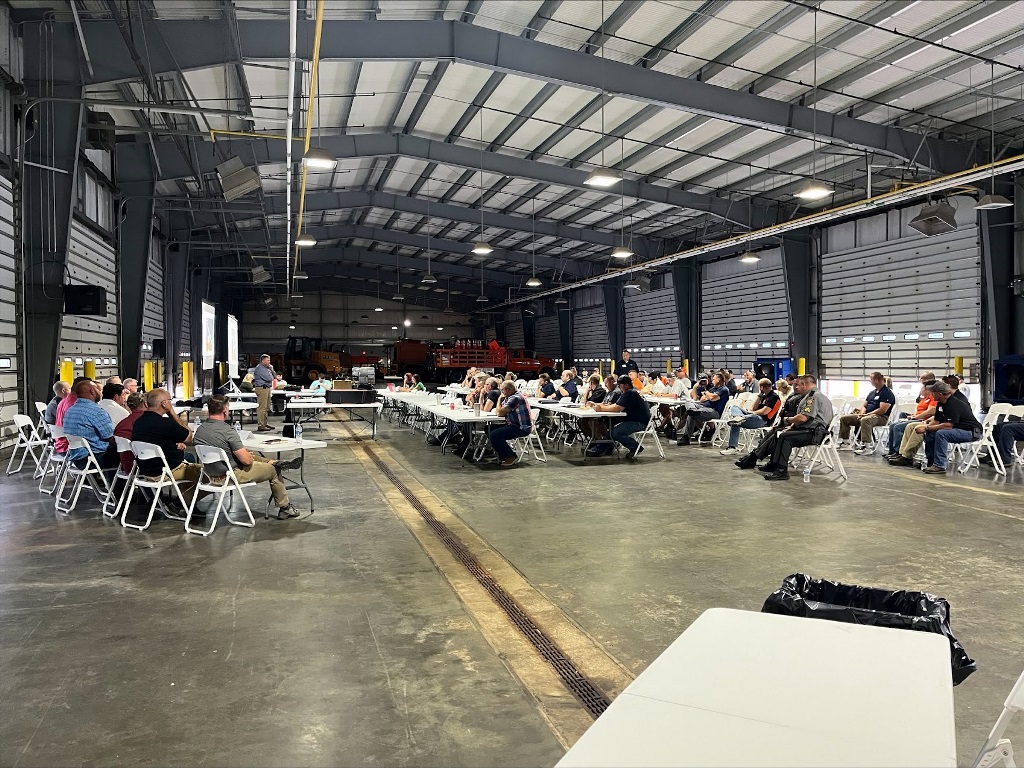
This review included an After-Action Review Meeting held in July at the Somerset Maintenance Facility with first responders and members from numerous state and local agencies that supported the response, including the Pennsylvania State Police, Bedford Area Ambulance, Bedford County 911, Berlin Ambulance, Berlin Volunteer Fire Department, Herring Motors, Interstate Emergency Services, Listie Volunteer Fire Department, New Baltimore Volunteer Fire Department, Pennsylvania State Fire Commission, Pennsylvania Emergency Management Agency, Pennsylvania Department of Transportation, Raystown Ambulance, Shanksville Volunteer Fire Department, Shawnee Valley Volunteer Fire Department, Sipersville Volunteer Fire Department, Somerset Area Ambulance, Somerset County 911, Somerset County Commissioners and Somerset County Emergency Management Agency. The review was structured around communications, preparedness and planning, incident command, tunnel operations and traffic management.
"Tunnel emergencies present safety challenges that are fundamentally different from incidents on an open roadway,” said PA Turnpike Commission COO Craig Shuey. “That is why ongoing training, preparation and learning from an incident like this are so important to the safety of our customers and responders. This review allows us to learn from the incident, strengthen our response and share those lessons with responding agencies beyond Pennsylvania.”
The resulting 19-page report identifies what worked during the response, areas where preparedness and procedures can be strengthened and corrective actions already underway. Among the review’s key findings:
In-tunnel Communications
- Finding: First responders had to switch between channels during the incident, and some personnel were unreachable by radio during parts of the incident.
- Area of Improvement: The report identifies the need to improve radio coverage and interoperability inside the tunnel among first responders and establish clearer backup communications and responder-accountability procedures.
- Action Taken to Date: The Commission provided additional radios to all that requested dedicated or additional units for Pennsylvania Turnpike operations at the Allegheny Tunnel After-Action Review meeting. The Commission is also evaluating and working to implement a bi-directional amplifier.
Ventilation and Smoke Management
- Finding: Reduced ventilation capacity and status of the tunnel's existing ventilation system affected the response during heavy smoke conditions. While the ventilation system remained efficient for normal day-to-day operations, smoke management during this fire was more challenging because of a transformer issue.
- Area of Improvement: The report identifies the need to improve ventilation-system readiness and establish clearer procedures for how incident command and PA Turnpike personnel coordinate the use of tunnel ventilation during an emergency.
- Action Taken to Date: A portable ventilation fan is now stationed at the Commission's Western Training Facility to provide supplemental ventilation capability during potential incidents. The transformer, which was undergoing maintenance prior to the June 4 incident, is expected to be fully repaired by the end of the year. The Commission has also purchased a spare transformer to minimize future impacts from supply-chain delays.
Evacuation Procedures
- Finding: Approximately 150 customers were evacuated from the tunnel during heavy smoke conditions. The response highlighted the need for more structured procedures to move and support customers during an evacuation, particularly those with limited mobility.
- Area of Improvement: The report identifies the need to formalize tunnel evacuation procedures, including customer movement instructions, designated waiting and assembly areas, support for customers with limited mobility and procedures for prolonged tunnel closures.
- Action Taken to Date: Foldable steps with railings have been purchased for halfway and crossover passages, two wheelchairs per tunnel have been purchased to assist customers with limited mobility, and customer safety and waiting areas have been identified for potential future incidents.
Incident Command and Responder Readiness
- Finding: The complexity of the incident required responders to operate across multiple locations, and the review found that command-post locations, responder reporting procedures and familiarity with tunnel infrastructure were not clearly or consistently established among all responding agencies.
- Area of Improvement: The report identifies the need to establish unified command earlier, more clearly designate where responders should report and expand hands-on familiarization with tunnel infrastructure, including hydrants, water-supply connections, access points and other emergency-response resources.
- Action Taken to Date: Incident command and customer safety locations have been identified. During scheduled tunnel maintenance closures, contracted fire departments are invited to attend, and responding agencies attended this year’s closure in August at Allegheny Tunnel for hands-on familiarization with water-supply connections, hydrants and access locations. Responders were also provided reference materials identifying hydrants, access doorways and measured distances, and additional equipment and mapping materials are being staged for future incidents.
Traffic and Recovery Operations
- Finding: Traffic management, customer relocation and recovery operations were ultimately effective, but the review found that many of the actions used to manage the prolonged closure — including access-gate use, queue relief, bus transportation, customer relocation and return-to-vehicle operations — relied on real-time adaptation rather than a single, standardized tunnel-closure and recovery plan.
- Area of Improvement: The report identifies the need to formalize procedures for major tunnel closures, including traffic and queue management, emergency-gate use, customer relocation, bus routing, recovery and reopening decisions, as well as more structured customer and traveler communications during prolonged closures.
- Action Taken to Date: The Commission has confirmed a designated helicopter landing zone and identified customer safety and waiting areas for future tunnel closures. Work is also underway to consolidate tunnel pre-plans, maps, response procedures and other resources into a more formal tunnel incident playbook.
To view the complete report, please visit: Traveling on the PA Turnpike | PA Turnpike
A national transportation leader, the Pennsylvania Turnpike (PA Turnpike) is the second largest tolling facility in the United States with the most miles. The PA Turnpike proudly supports safety and convenience for its more than 550,000 daily customers through 24-7 roadside assistance, round-the-clock food and fuel at 17 service plazas and a dedicated maintenance force and State Police Troop. The PA Turnpike’s approximately 1,400-person local workforce is unified in its mission; to operate a safe, reliable, customer-valued toll road system that supports national mobility and commerce. For more information about the PA Turnpike’s mission, vision and values, please visit Home | PA Turnpike.
###
Frequently Asked Questions:
What happened in the Allegheny Tunnel on June 4, 2026?
A pickup truck towing a trailer caught fire inside the westbound tube of the Allegheny Mountain Tunnel. The incident required a large-scale emergency response involving the Pennsylvania Turnpike Commission, first responders, law enforcement, emergency management agencies, and other partners. Approximately 150 customers were safely evacuated.
Why did the Pennsylvania Turnpike conduct an After-Action Review?
The Commission conducted the review as part of its standard process to evaluate the emergency response, identify lessons learned, recognize what worked well, and implement improvements to strengthen future tunnel emergency response and customer safety.
What did the review find?
The report identified five primary areas for improvement:
- In-tunnel communications
- Ventilation and smoke management
- Evacuation procedures
- Incident command and responder readiness
- Traffic and recovery operations
How were motorists evacuated?
Customers were evacuated through the over one-mile tunnel. The review found opportunities to create more structured evacuation procedures, including clearer customer movement instructions, designated waiting areas, and additional support for people with limited mobility.
Why was this incident so challenging?
The Allegheny Mountain Tunnel is more than a mile long and located along the longest stretch between interchanges on the PA Turnpike. During the fire, responders faced heavy smoke, trapped vehicles, customer evacuations, a medical emergency, and operations across both tunnel tubes.
What is the Pennsylvania Turnpike doing differently now?
The Commission is developing more formal tunnel emergency plans, improving communications and evacuation procedures, enhancing responder training, strengthening ventilation readiness, and creating a comprehensive tunnel incident playbook to guide future responses.
Where can people read the full report?
The Pennsylvania Turnpike Commission states that the complete After-Action Review report will be made available online.
Media Contacts:
Marissa Orbanek, Press Secretary: 267-408-5151, morbanek@paturnpike.com
Crispin Havener, Assistant Press Secretary: 717-870-2841, chavener@paturnpike.com